


Heat pumps are gaining popularity as an ecological and economical way to heat homes. Many people still wonder, however, whether a heat pump heats at -20 degrees and whether a heat pump in winter really delivers thermal comfort. In this article we will clear up the doubts and explain how a heat pump works when it is freezing, and what to do so that it operates efficiently even at very low temperatures.
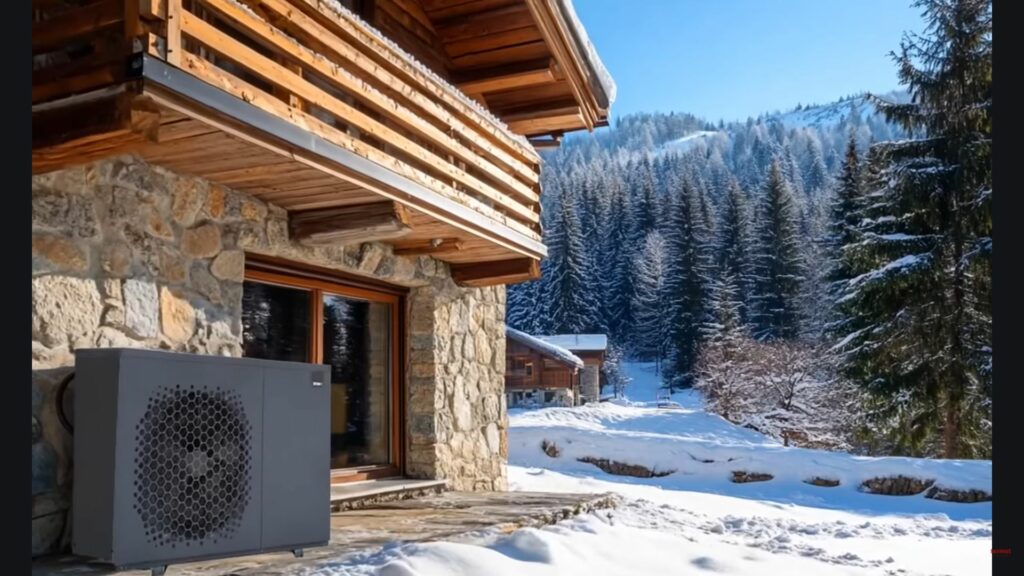
One of the most frequently asked questions is whether a heat pump works efficiently at low temperatures. Contrary to those concerns, modern heat pumps, including models from Termet S.A., have been designed to operate even in extreme weather conditions.
An excellent example is the Termet Heat Titanium Pro, an air-to-water monoblock heat pump using ecological R290 refrigerant, which enables efficient operation at temperatures as low as -25°C. Thanks to the inverter compressor, the unit matches heating output to the building’s current needs, which significantly reduces energy use. So yes, the heat pump still heats even at -20, although its efficiency may drop slightly. A well-sized unit will nevertheless heat the house effectively. The Termet Heat Titanium heat pump was designed and tested in Poland, so it is adapted to our climate conditions.
How a heat pump operates in freezing weather
In freezing weather a heat pump operates at a lower coefficient of performance (COP), but it is still more energy-efficient than conventional electric heaters. For example, at -7°C the COP is around 2.5–3, and at -15°C it falls to about 2. That means that even in these conditions the unit produces twice as much heat as the electricity it consumes.
What to do when the heat pump needs support?
In the hardest frosts, even the best heat pump may need support. Electric heaters are most commonly used. If the heat pump was sized incorrectly, however, the heater may run for too long, driving up electricity bills. A solution can be a gas peak heat source, such as Termet’s EXTRA POWER 20. Minimal electricity consumption (approx. 70 W) means that a unit fitted with a UPS can operate even during power outages. EXTRA POWER supports the heat pump only on the coldest days and can also be connected to an existing installation. It is an economical alternative to the electric heaters used as standard, and a way to ensure full thermal comfort throughout the winter.
How to ensure maximum heat pump efficiency in winter?
Choosing a heat pump to heat a building in winter can be a good solution, but several conditions must be met for it to be as efficient as possible. First, proper building insulation is the most important factor. In a well-insulated house the heat pump runs for less time, and the heaters are almost never activated. Equally important is matching the unit to the building’s heat demand. Termet provides the Heat Pump Selection Program, which helps choose the right model and installation parameters. Poor matching is the main reason for heating problems in winter.
Integration with photovoltaics is also a good choice. Powering the heat pump with free electricity from PV significantly lowers operating costs.
So is it worth investing in a heat pump where winters can be frosty? Definitely yes. The key to success is good thermal insulation of the house, selecting a unit with the right output matched to the building’s heat demand, and cooperation with photovoltaics. Then you can be sure that the appliance will provide thermal comfort all winter and help you save on energy bills.
If you want to be sure that a heat pump will not let you down in freezing weather, choose proven solutions. Termet appliances from the Expert Line series were designed and tested for efficient, reliable cooperation in our climate conditions, and authorized installers and Termet service technicians are trained in their selection, installation, and maintenance. It is worth trusting the experts.
Why are a heat pump and photovoltaics the perfect pair? Find out from the video on Akademia Ciepła – Termet on YouTube: