


In an era of rising energy prices and increasingly advanced solutions, smart home is no longer a curiosity – it is becoming a real tool for optimizing costs and raising living comfort. For installers and informed users of modern heating systems, what matters is not only efficient heat sources, but also management systems that optimize the operation of the installation, automatically adapting it to changing conditions. What does smart heating control involve, and how can you implement it in your own home?
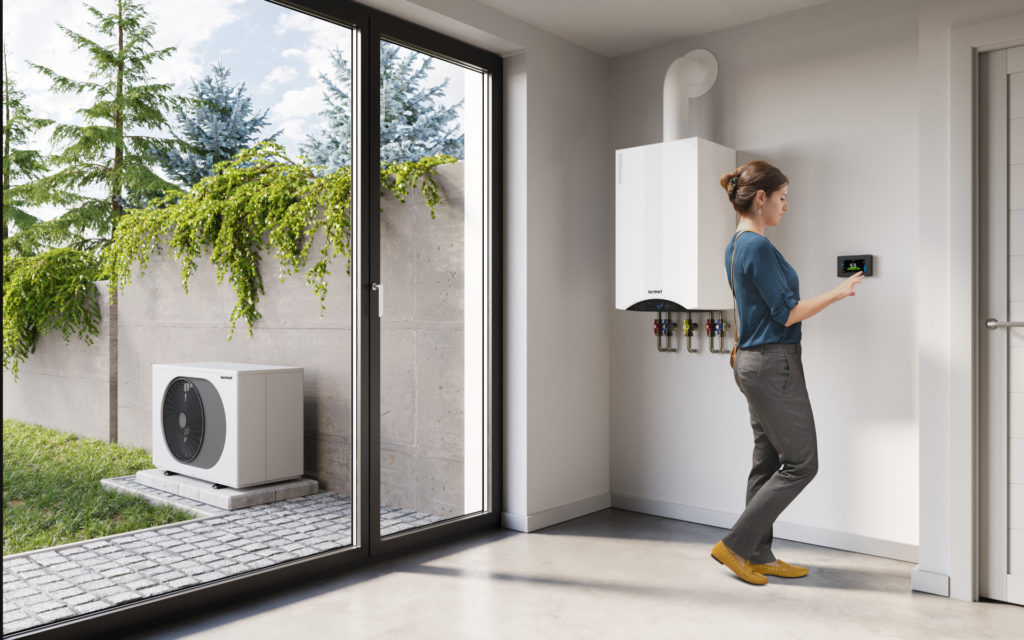
Smart home solutions are more than a thermostat with a dial and an “eco” option. Modern systems such as Termet Comfort make it possible to manage the temperature in the home remotely, regardless of where we are, because we can do it from a smartphone or tablet. Smart controllers, weather sensors, schedules, and zoned heating management form an integrated ecosystem that automatically adjusts settings to maintain comfort with minimal energy use.
For example, using weather compensation can deliver energy savings of up to 10% while maintaining an optimal indoor temperature. In this case the system’s “heating output” is regulated automatically based on readings from outdoor temperature sensors. When the outdoor temperature drops, the heating water temperature is raised before rooms get cold, and vice versa when it gets warmer outside. As a result, users have thermal comfort regardless of the weather.
Modern heating control systems can be based on schedules that take into account the typical activity of household members. Thanks to this, heating can be reduced when the house is empty and brought up to the optimum temperature before household members return, for example from work. And what if you come home earlier or have a day off? With remote control systems such as Termet Comfort, you can switch heating on or off at any time, even when you are away from home. That is not only convenience – above all it means an end to unnecessarily heating empty rooms or coming back to a cold house.
Zoned heating – the right temperature in every room
Heating systems can be divided into zones, and each of them (for example the bedroom, living room, or bathroom) can be controlled independently. This solution is particularly valued by installers and informed investors, and it brings many benefits. We can heat the house only where it is needed at a given moment – for example keeping a lower temperature in the bedroom during the day. It also makes it possible to match the temperature independently to the function of the rooms – because in the bathroom, when we step out of the bath, 25°C is pleasant – and to users’ needs, because we all have different temperature preferences and each of us perceives it differently. Zoned control also allows integration with room controllers and thermostatic radiator heads.
Remote access, or control from anywhere in the world
Systems such as Termet Comfort provide remote heating control, for example checking the current temperature in the home, but also starting the heating before returning from holiday or reacting quickly to a sudden change in the weather. What is more, the system will notify us of incorrect operation of the installation or a fault, so we can respond faster and call a service technician at the right moment.
Integration of hybrid systems
One of the solutions that is gaining popularity is hybrid installations, that is systems using different heat and energy sources. Termet offers solutions that enable a heat pump to work, for example, with a gas boiler as a peak heat source, e.g. Extra Power 20, or with photovoltaics. Thanks to modern control systems, the system automatically switches to the preferred heat source depending on conditions, so there is no need for constant supervision and manual control, which provides comfort and significantly lowers bills. Such solutions are particularly recommended for energy-efficient or passive buildings, in which heat losses are minimal and insulation meets current WT technical requirements. In such buildings both systems can operate at maximum efficiency.
Managing heating on the basis of data (temperature, weather, schedule) can deliver savings of as much as 30–37% compared with a conventional system without automation. Why? Because we do not overheat rooms, the systems used respond quickly to temperature fluctuations, and heating operates only when it is really needed. If you are planning to upgrade your heating system or add automation to an existing installation, choose smart solutions from the Termet S.A. range. Remote control, weather analysis, zoning, integration with heat pumps, heat recovery ventilation, and photovoltaics – all of this will give you full control over energy and costs.
Want to learn more? Watch the film about temperature controllers for a condensing boiler on Akademia Ciepła -Termet S.A. on YouTube: